Japan's New FX Strategy: From Verbal Jawboning to Stealth
We are watching what appears to be the most consequential recalibration of Japan's foreign exchange posture in roughly twenty years — a pivot from the familiar playbook of "verbal intervention"
Rebecca Jennings·updated July 11, 2026
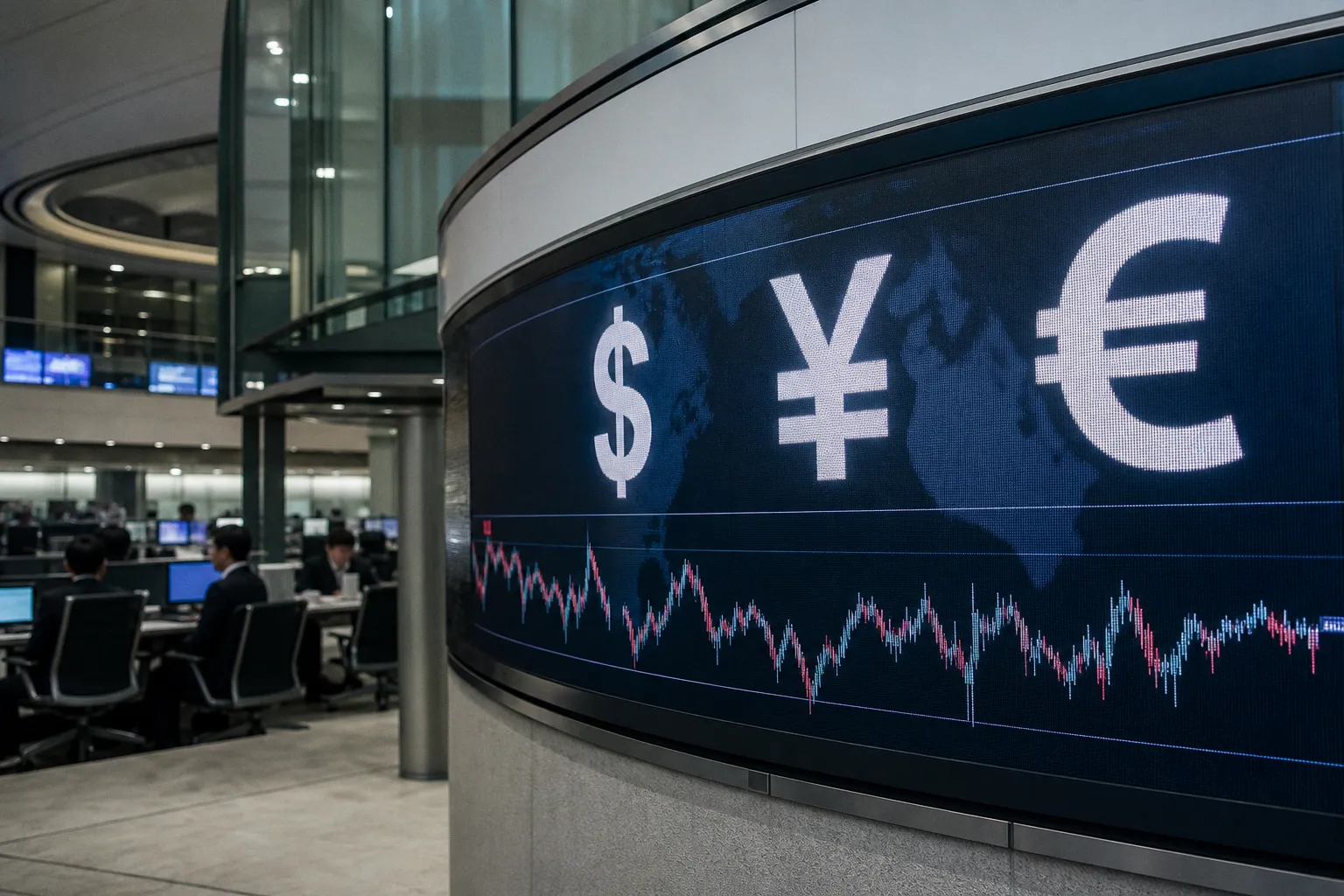
From Rhetoric to Absorption
For the better part of the recent cycle, Japanese authorities relied on coordinated signaling — Ministry of Finance jawboning, timed press leaks, and telegraphed rhetoric — to slow yen depreciation without committing hard reserves. That approach has now reportedly given way to a quieter but more aggressive containment mechanism, deploying liquidity absorption and stealth reserve management to throttle currency outflows rather than openly confront market positioning. According to the Moomoo report, this constitutes the sharpest change in Japan's FX doctrine in two decades. The distinction matters for positioning: verbal intervention produced headline volatility around the trigger but rarely altered the underlying trajectory, whereas absorption-based containment targets the rate of change itself.
The Korean Liquidity Window Opens
The strategic recalibration is unfolding alongside structural change across Asian FX plumbing. On July 6, South Korea's won-dollar market effectively converted to a continuous 24-hour trading window — operating from 6 a.m. Monday through 6 a.m. Saturday (Friday afternoon U.S. Eastern Time), with execution also available on domestic holidays. On the first session under the new regime, the won closed at 1530.0 against the dollar, down a marginal 0.3 won. The DXY oscillated above the 101 mark intraday before settling at 100.84. The yen drifted back to 162.053 per dollar after briefly touching the 160 handle earlier in the month, leaving the won at 943.26 per 100 yen. Extending the trading envelope raises the bar for offshore won liquidity and tightens the channel through which yen crosses can be arbitraged.
What We're Watching
The reserves backdrop is split, and that asymmetry matters. The Bank of Central African States (BEAC) projects a 25% increase in foreign exchange reserves by year-end 2026, reaching approximately USD 13.9 billion — a clear accumulation signal from a smaller sovereign player. China's June reserves, by contrast, slid to USD 3.416 trillion, missing consensus and reinforcing capital outflow pressure on the largest stockpile globally. For our positioning, the actionable tells are straightforward: whether Japan's new containment produces compressed realized vol on USD/JPY even as the spot rate grinds lower; whether the DXY holds the 100 handle — a break would unwind the rationale for the strategic pivot; and whether the Korea 24-hour rollout migrates won volume onshore at the expense of offshore pricing.