ECB Maintains Current Interest Rates Amid Persistent Energy Market Uncertainty
The Governing Council's decision to hold the deposit facility at 2.25%, the main refinancing rate at 2.40%, and the marginal lending facility at 2.65% was, by the ECB's own framing, a choice made under duress rather than comfort.
Rebecca Jennings·updated July 23, 2026
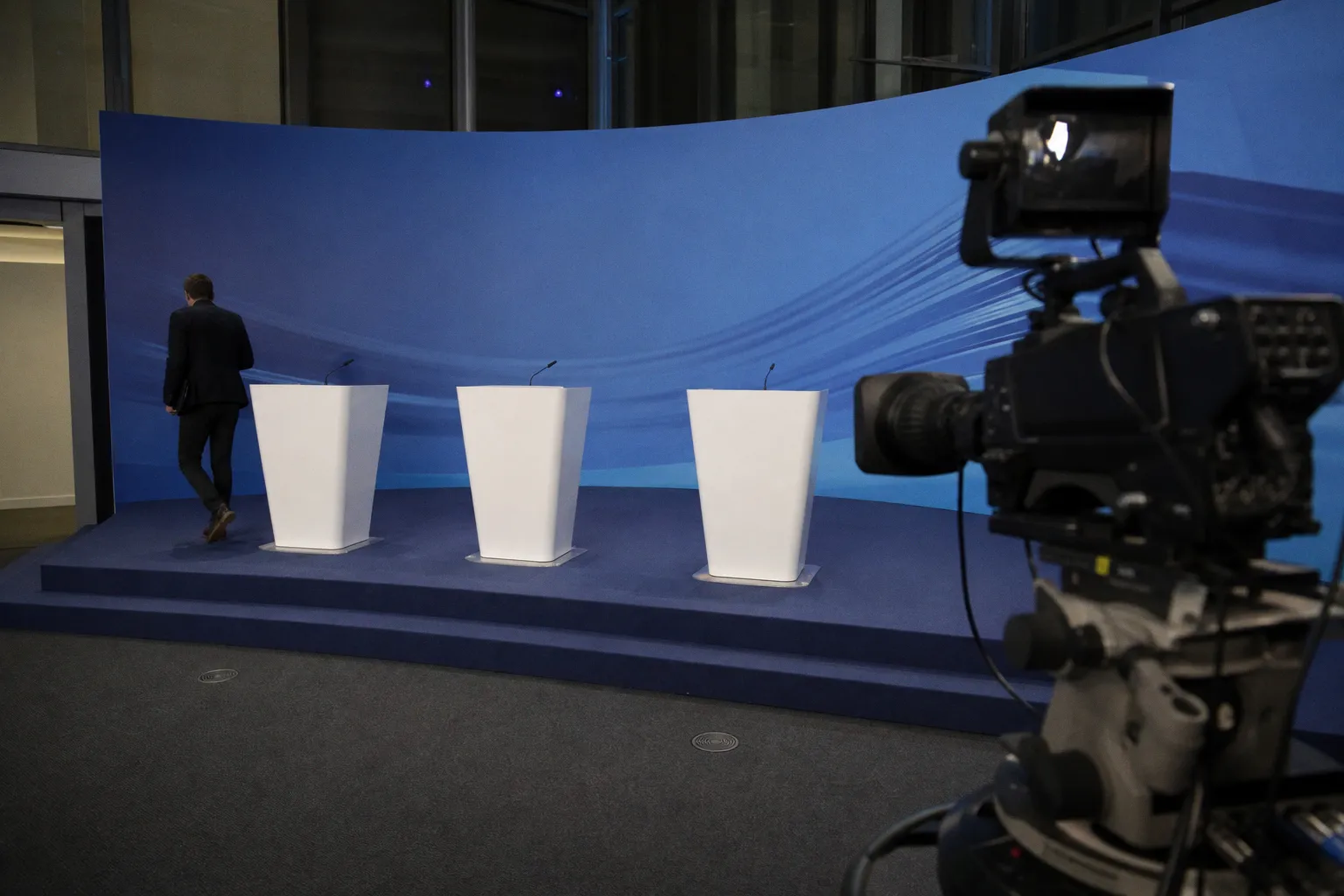
Energy prices remain "highly volatile," yet the Council judged them broadly aligned with the June Eurosystem staff baseline — a remarkably narrow needle to thread when the full inflationary spillover from the Middle East conflict has, in their words, "yet to play out." For the EUR-cross trader, the immediate takeaway is that this is a central bank choosing optionality over conviction, and the forward guidance reveals as much about what they do not know as what they do.
What the hold actually signals
There is no pre-commitment to a rate path, and that phrase deserves more weight than the market often assigns it. In prior cycles, a hold after a sequence of elevated rates signalled either a terminal plateau or the opening act of a dovish pivot; here, the Council is explicitly refusing either narrative. The emphasis on incoming data, underlying inflation dynamics, and the "strength of monetary policy transmission" tells us the hawks have not ceded ground — they are simply unable to argue for further tightening while the energy shock's second-round effects remain unquantified. We are, in effect, in a policy limbo that could persist through year-end if the energy trajectory remains near these levels. The spread between the deposit rate and the Federal Funds effective rate thus becomes the critical variable: as long as the Fed maintains its own restrictive posture and the ECB holds, yield differentials continue to support a structurally firm dollar against the euro on a carry-adjusted basis.
Portfolio rundown and what to watch
The APP and PEPP roll-off continues at its measured, predictable pace — no reinvestments, no surprises — which means the balance sheet is still quietly tightening even as the headline rate stands still. This passive liquidity absorption matters for EUR swap spreads and for the broader funding environment that underpins EUR/USD positioning. The Transmission Protection Instrument remains on standby, invoked as a backstop against "unwarranted, disorderly market dynamics" — a reminder that sovereign spread blowouts are still treated as a monetary policy transmission threat, not merely a fiscal concern. For us, the levels to monitor through the press conference and into the August data calendar are straightforward: EUR/USD's reaction around the 1.0800 handle on any hawkish re-interpretation, and the 2-year EUR-USD swap differential, which if it widens further will reinforce the carry rationale for short euro positions. The next Governing Council meeting will be parsed not for what the Council decided today, but for how far the energy picture has shifted by then — that is where the next genuine repricing catalyst lives.